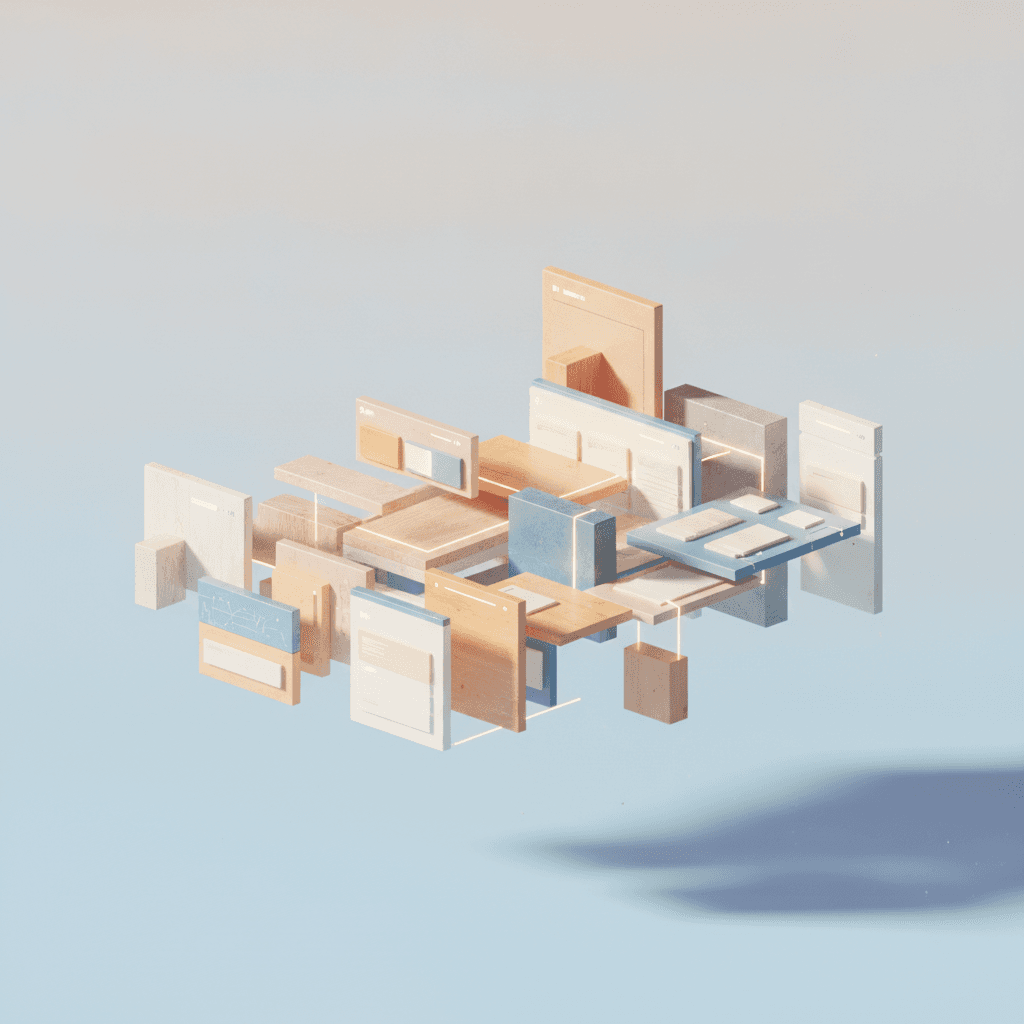
In the fast-evolving landscape of web development, efficiency and flexibility are paramount. As designers and developers, we're constantly seeking tools that allow us to build sophisticated websites faster, without sacrificing quality or scalability. The rise of no-code platforms has fundamentally changed how many approach web creation, democratizing access to powerful functionalities that once required extensive coding knowledge.
Among these innovations, the no-code Content Management System (CMS) stands out as a game-changer for handling dynamic content and crafting intricate data structures. It empowers makers to move beyond static pages, building rich, data-driven experiences that are easy to manage and update. This article explores how no-code CMS platforms enable you to design for true dynamism and custom content architectures, transforming your workflow and the projects you can deliver.
Beyond Static Pages: Understanding No-Code CMS
Traditionally, a CMS like WordPress allowed users to manage pages and posts, often within predefined structures. While powerful, customizing these structures could become complex. No-code CMS platforms offer a different paradigm: a visual, intuitive interface for defining and managing all your website's content, completely separate from its design. This headless approach means your content can live independently and be delivered to any front-end, whether it’s a website, a mobile app, or another digital experience.
At its core, a no-code CMS provides a content backend where you can structure, store, and edit all your digital assets without writing a single line of code. Think of it as a highly organized database that’s specifically designed for web content, but with a user-friendly layer that makes content creation and management accessible to anyone on your team, from content strategists to marketing professionals and, of course, designers and developers.
The Power of Dynamic Content Types
One of the most significant advantages of a no-code CMS is its ability to define custom content types (often called 'collections' or 'models'). Instead of being limited to 'pages' and 'posts,' you can create any content structure your project demands. Need to manage a portfolio of projects? Create a 'Project' content type. Building an e-commerce site? Define 'Product' and 'Category' content types. Each content type can have its own set of custom fields, allowing you to capture precisely the data you need.
These dynamic content types are the backbone of flexible website design. Once defined, you can populate them with content and then connect them to your website's visual front-end using a no-code page builder or a custom front-end framework. This separation allows content creators to focus solely on content, while designers can build reusable components that automatically display content from these structured collections, ensuring consistency and reducing manual updates.
Crafting Custom Structures with Ease
The true magic of a no-code CMS lies in its flexibility for defining custom fields and relationships between content types. You're not restricted to basic text fields; you can add rich text editors, image and video uploaders, number fields, boolean toggles, date pickers, and even reference fields that link one content type to another. For example, a 'Blog Post' content type could have fields for 'Title,' 'Author' (referencing an 'Author' content type), 'Hero Image,' 'Category' (referencing a 'Category' content type), and 'Rich Text Body'.
This granular control over content structure allows designers to architect their data precisely to match their design vision. You can define exactly what data points a content piece will have, ensuring that the content fits perfectly into your design components. This approach eliminates the need for developers to hard-code content structures or for content creators to shoehorn information into ill-fitting templates. It's about designing the data alongside the visuals.
Bridging Design and Data
The integration between a no-code CMS and visual website builders is where the power truly unfolds for designers. Once your content structures are defined in the CMS, you can connect your front-end design elements directly to these content fields. A 'blog post' template, for instance, can have its heading element dynamically pull from the 'Title' field of your 'Blog Post' content type, its image from the 'Hero Image' field, and so on.
This seamless connection means you can design a single template or component, and it will automatically populate with content from your CMS, enabling you to build entire sections of a website – like a blog feed, product listings, or team member profiles – with minimal effort. It fosters an iterative design process where you can build content structures, populate them, and instantly see how they render on your live design, making adjustments on the fly.
- Faster prototyping and development cycles.
- Empowered content creators with structured input.
- Easier content updates without developer intervention.
- Scalability for growing content needs.
- Improved collaboration between design and content teams.
- Reduced technical debt compared to custom code solutions.
Best Practices for Designing with No-Code CMS
To get the most out of a no-code CMS, consider these best practices. First, always plan your content structure before you start building. Think about all the pieces of information each content item will need and how different content types might relate to each other. A solid content model is the foundation for a scalable and maintainable website. Sketching out your content types and their fields can save significant time down the line.
Second, design for flexibility and reusability. Create components and templates that can dynamically adapt to varying content lengths and types. Consider how your content will look across different devices and contexts. This foresight ensures your designs remain robust as content evolves and scales.
Finally, establish clear naming conventions for your content types and fields. Consistent naming makes it easier for everyone on your team to understand the content structure, reducing confusion and improving collaboration. A well-organized CMS is a joy to work with, while a chaotic one can quickly become a bottleneck.
The Future is Flexible
No-code CMS platforms are more than just tools; they represent a shift towards more intuitive, collaborative, and efficient web design and development. By abstracting away the complexities of database management and content APIs, they empower designers and makers to focus on what they do best: creating exceptional digital experiences.
For anyone building websites today, understanding and leveraging the power of no-code CMS for dynamic content and custom structures is no longer a niche skill but a fundamental approach to delivering modern, maintainable, and highly flexible web projects. Embrace these tools, and unlock new possibilities for what you can create.
Sources & Further Reading
- Content management system — Wikipedia
- No-code development platform — Wikipedia
- Design Systems — Interaction Design Foundation
- Post Types — WordPress.org documentation