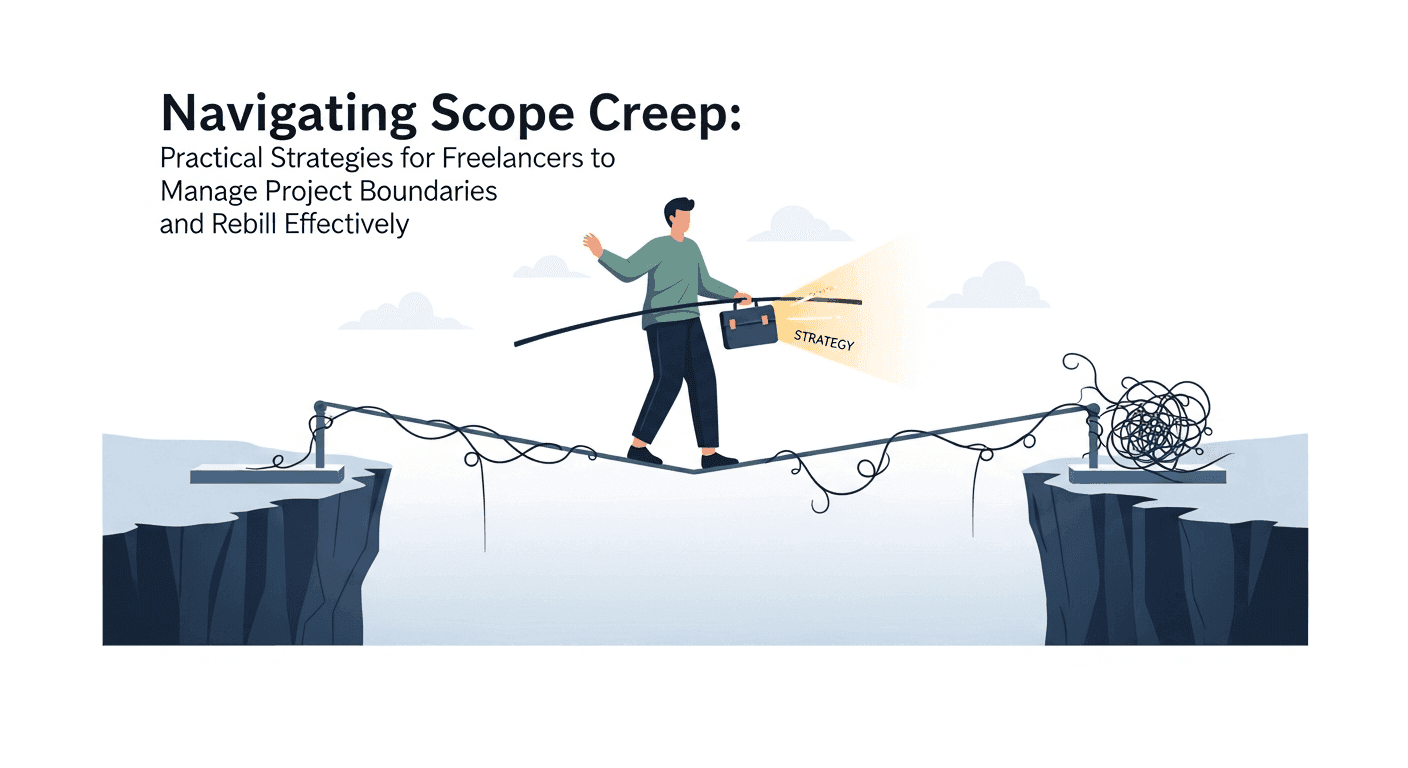
Freelancers often face the silent project killer: scope creep. It's that insidious expansion of project requirements beyond what was initially agreed upon, subtly chipping away at your time, profitability, and sanity. What starts as a “quick tweak” can quickly snowball into hours of unpaid work, derailing timelines and straining client relationships.
This article dives deep into practical, actionable strategies for web design and development freelancers to not only identify and prevent scope creep but also to confidently manage project boundaries and, crucially, effectively rebill for out-of-scope work. We'll equip you with the tools to protect your valuable time and ensure every hour you spend on a project is compensated fairly.
What is Scope Creep and Why Does It Matter?
Scope creep, often called “feature creep” or “requirement creep,” occurs when the project's boundaries expand beyond the initial, agreed-upon scope without corresponding adjustments to budget or timeline. This isn't just about clients being demanding; it can stem from poor initial definition, evolving client needs, or even a freelancer's eagerness to please. For independent professionals, the stakes are particularly high, as every unbilled hour directly impacts personal income and capacity for other projects.
The consequences extend beyond lost revenue. Unmanaged scope creep leads to missed deadlines, increased stress, burnout, and ultimately, dissatisfaction for both the freelancer and the client. It can damage your professional reputation if projects consistently run late or over budget, even if the overruns aren't your fault. Understanding its root causes and systemic impact is the first step toward effective management.
Prevention is Better Than Cure: Setting Clear Foundations
The Power of a Detailed Statement of Work (SOW)
Your SOW isn't just a formality; it's your project's constitution. It meticulously outlines what *is* included and, equally important, what *isn't*. A vague SOW is an open invitation for scope creep. Invest time upfront to make it watertight. This document is your first line of defense, providing a clear reference point for all future discussions and decisions. Make it specific, measurable, achievable, relevant, and time-bound (SMART).
Transparent Communication from Day One
Set expectations early. From your initial discovery calls, explain your process for changes and additional requests. Make it clear that any deviation from the agreed SOW will necessitate a change order and potentially additional costs or timeline adjustments. This upfront honesty builds trust and educates the client on how you operate, minimizing surprises down the line.
- Clearly defined project goals and objectives.
- Specific deliverables with detailed descriptions (e.g., "5 unique page templates," not "a website").
- Detailed list of included features and functionalities.
- Explicitly state what is *not* included (e.g., "content creation not included," "stock photography beyond initial licensing not included").
- Defined project timeline with key milestones and client review stages.
- Payment schedule and terms.
- Clear change request process outlining how additional work will be quoted, approved, and billed.
- Number of revisions for each deliverable (e.g., "up to 2 rounds of revisions per page design").
Spotting Scope Creep Early: Warning Signs
Clients starting sentences with "Just one more thing..." or "While you're in there..." are red flags. Other subtle indicators include requests for features not discussed, changes to core functionalities post-approval, or an increasing number of meetings without clear agendas. These seemingly small requests accumulate, eventually demanding significant unpaid time and potentially derailing the entire project timeline.
Pay attention to your intuition. If a request feels like it's taking you off the agreed path, or if you find yourself spending unexpected hours on tasks that weren't budgeted, it's time to pause and assess. Early detection allows for a calm, professional discussion before the situation escalates, giving you the opportunity to address it before it becomes a major problem.
- Frequent "small" requests outside the SOW.
- Client suggesting new features or pages after initial approval.
- Requests for changes to already completed and approved work.
- Discussions about future phases or additional functionalities before current phase completion.
- Increased number of meetings without clear, defined objectives.
- Client providing content or assets that significantly differ from agreed-upon structure or volume.
- Increased client contact that doesn't align with project milestones.
The Art of Saying "No" (Gracefully)
Saying "no" doesn't mean being unhelpful; it means protecting your project's integrity and your business. Frame your "no" as a "yes, but..." For example, "Yes, we can definitely add that new feature, but it will require a change order and an adjustment to the timeline." This shifts the conversation from a refusal to a solution-oriented discussion about process and cost, empowering the client to make an informed decision.
Always refer back to the SOW. "That's an excellent idea, and it's something we could certainly explore. As per our current Statement of Work, this falls outside the agreed scope. Would you like me to prepare a separate proposal for this additional functionality?" This approach reinforces your professionalism and commitment to the agreed terms, reminding the client of the initial agreement without sounding confrontational.
Documenting Changes: Your Paper Trail is Gold
Every single change request, whether approved or rejected, must be documented. This includes email correspondence, detailed meeting notes, and formal change orders. A change order should clearly detail the new request, its impact on the timeline and budget, and crucially, require client sign-off before any work commences. This formalizes the process and ensures both parties are in agreement about the revised scope.
This comprehensive documentation protects you legally and provides a clear record for both parties. It eliminates ambiguity and serves as an undeniable reference point when discussions about project scope or billing arise. Tools like project management software (e.g., Asana, Trello, ClickUp) or dedicated change order forms are invaluable here, providing a centralized and accessible record of all project modifications.
Rebilling for Out-of-Scope Work: A Step-by-Step Guide
When a client requests work clearly outside the SOW, don't just do it. First, acknowledge the request and confirm it's out of scope, referencing your SOW. Second, clearly explain the implications (additional cost, timeline impact). Third, provide a detailed quote or estimate for the new work, breaking down the tasks and estimated hours. Fourth, get written approval (a signed change order) before proceeding with any new tasks.
Present the additional cost with confidence and clarity. Break down the new work into specific tasks and hours, just as you did for the original proposal. Transparency helps clients understand the value they're getting for the additional investment. Avoid vague figures; be precise about why the additional work warrants the additional cost. This clear communication prevents misunderstandings and demonstrates your professional approach to project management.
Integrate the rebilled work seamlessly into your existing invoice or as a separate addendum. Ensure your invoicing system clearly distinguishes between original scope work and additional, approved change orders. This clarity is crucial for maintaining trust, avoiding disputes, and ensuring your financial records are accurate. Consider using invoicing software that allows for easy addition of line items for out-of-scope work.
Client Education: Empowering Them to Help You
Many clients aren't intentionally trying to creep the scope; they simply don't understand the intricacies of web development or design. Educate them about the ripple effect of seemingly minor changes. Explain how adding a new field to a form might impact database structure, front-end design, and testing protocols, consuming significant time and effort across multiple project areas. This knowledge empowers them to make more informed decisions.
Frame this education as a benefit to them: "By keeping the initial phase focused, we can launch faster and iterate based on real user feedback, ensuring your investment is optimized." Empowering clients with this knowledge helps them appreciate your professional boundaries and often leads to more thoughtful requests, as they understand the broader implications of their suggestions.
When to Walk Away: Knowing Your Limits
While rare, there are instances where a client consistently disregards the SOW, refuses to acknowledge change orders, or demands unreasonable amounts of unpaid work. In such cases, despite the financial implications, it might be healthier for your business and well-being to terminate the project. Continuing to work under such conditions can lead to severe burnout, damage your reputation, and prevent you from taking on more valuable projects.
This is a last resort, but having a clear exit clause in your contract and knowing when to invoke it is a critical aspect of freelancing resilience. It protects you from clients who will drain your resources and damage your reputation. Prioritize your mental health and business sustainability; sometimes, walking away, even from a paying project, is the most strategic decision.
Key Takeaways for Managing Scope Creep
Scope creep is an inevitable challenge in freelancing, but it doesn't have to be a project killer. By proactively setting clear boundaries with a detailed SOW, communicating transparently from the outset, diligently documenting every change, and confidently rebilling for out-of-scope work, you can protect your time, profitability, and professional relationships. Embrace these strategies to build a more sustainable, less stressful, and ultimately more successful freelance career in web design and development.
Sources & Further Reading
- Scope creep — Wikipedia
- Project management — Wikipedia
- Project Management for UX Designers: A Comprehensive Guide — Interaction Design Foundation
- Design Documentation: The Ultimate Guide — Interaction Design Foundation